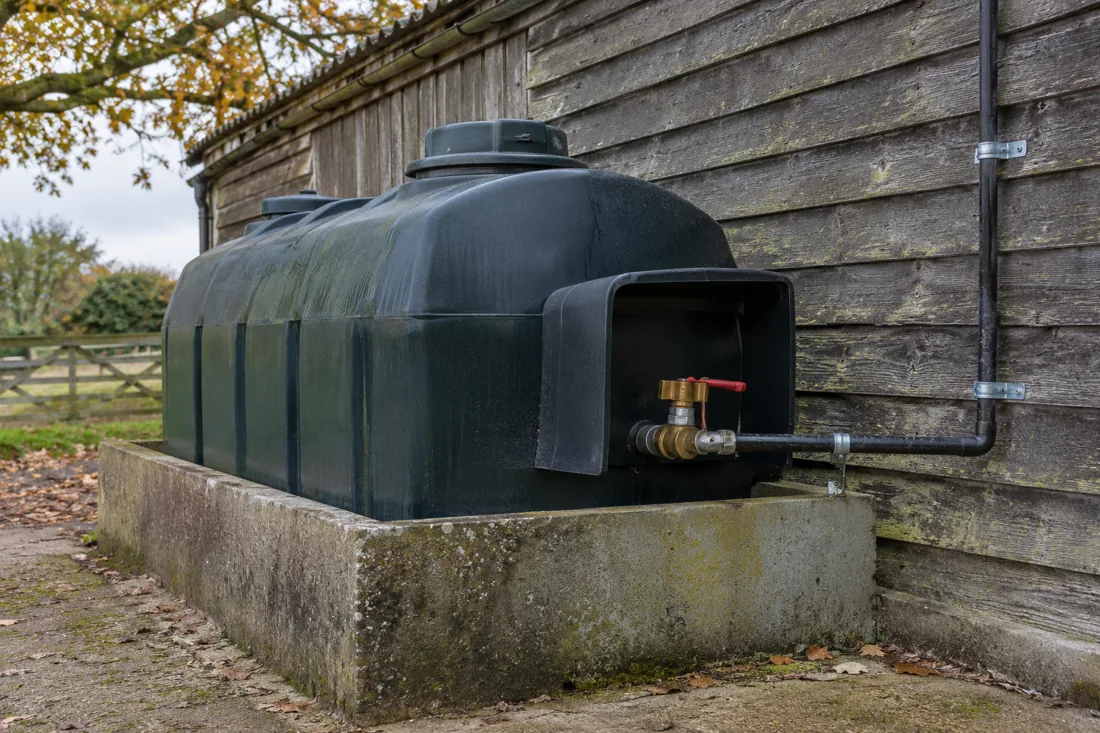
If Oil Is Escaping Now
Keep people and animals away from the affected area. Do not wash oil away, use detergent, attempt a patch or interfere with electrical equipment. If there is immediate danger to people, contact the emergency services.
Use the official Environment Agency water pollution reporting route if oil has reached or threatens water. Our enquiry form is not monitored as an emergency channel and does not replace reporting an incident.
A leak needs attention to both the escaping fuel and what it has reached. Replacing a damaged tank may resolve the storage failure while leaving a separate clean-up problem. Tell your insurer early and ask what evidence and specialist authorisation they need.
What The Warning Signs Can Mean
A strong smell of oil, wet staining, a sudden unexplained fall in level or oil collecting around fittings can indicate a leak. Cracks, bulging plastic, corroded steel and failing supports also need professional assessment. Do not assume the main tank shell is the only possible source.
Supply pipes, valves and connections can leak, including below ground where the damage is not obvious. A boiler fault and a storage fault can occur at the same time. Describe what you have seen without opening equipment or disturbing contaminated ground to investigate.
Source Control And Fuel Recovery
A specialist assesses the source, risks and possible routes for oil to spread. The response may involve making the affected system safe, protecting drainage and recovering fuel into suitable temporary storage. The equipment and method depend on access, remaining quantity and the tank’s condition.
Tell the attending contractor if heating or machinery still depends on the tank. They need to coordinate isolation and any temporary supply rather than leave connected equipment drawing from an unsafe arrangement. Availability of temporary storage or heating support must be confirmed for the actual incident.
Fuel that can be recovered is assessed before reuse. Contaminated product, oily water and absorbent material may need different waste handling.
Repair, Replacement And Investigation
A cracked plastic tank normally needs replacement rather than an improvised patch. A fitting or pipe fault may need a different intervention. The condition of the whole installation, including its base and containment, matters when deciding what can safely remain.
Oil can move below paving or towards drainage without leaving an obvious surface stain. Persistent odour or suspected ground impact may call for environmental investigation. Excavating a small visible patch is not proof that the full extent of contamination has been found.
For a suspected buried source, read the underground tank guide. Keep removal, replacement and remediation clearly described as separate parts of the proposed work.
Lincolnshire Sites And Access
A ditch beside a farm drive or a drain in a paved yard may provide a route away from the tank. Rural location does not make a spill self-contained. In a garden, oil may also threaten neighbouring land or a building, even when the tank itself is accessible.
Provide the exact address, nearest accessible entrance and any vehicle restrictions. Explain whether the tank is behind a house, inside a yard or reached along a long track. Tell the contractor about animals, occupied buildings and other people who use the access route.
Evidence, Insurance And Cost
If safe, record photographs from a distance, the date you noticed the problem and any recent gauge readings. Keep delivery tickets, tank inspection records and earlier repair invoices. Tenants should tell their landlord or managing agent promptly.
The cost depends on the source, recovered fuel, temporary storage, affected materials and any investigation or reinstatement. Insurance cover and authorisation vary by policy. Ask before major works begin where circumstances allow, and do not assume lost fuel, soil treatment and a replacement tank share the same cover.
A first attendance may identify further work rather than settle the entire incident. Request a clear record of immediate actions and the next decision required.
After The Immediate Problem
Keep the work record, photographs, waste documentation and any sampling results together. Documents should distinguish material removed from areas investigated and any further action recommended. A new tank warranty is not an environmental clearance report.
Review the cause before the installation returns to ordinary use. Support failure, impact exposure, water entry or a defective pipe route may need attention as well as the tank. For a planned new store, see installation considerations before selecting its position.
Common Questions
Should I Put An Enquiry In For An Active Spill?
An active oil spill needs prompt incident reporting and specialist attention. This form is suitable for sending details but does not offer emergency dispatch or a guaranteed response time. Use the official pollution reporting route where water is affected or at risk, and notify your insurer rather than waiting for an online reply.
Will A New Tank Solve The Whole Leak Problem?
A new oil tank can replace failed storage, but it does not deal automatically with oil already in soil, drains or a building. The source must be established and the affected area assessed. Ask for separate descriptions of the tank work, immediate containment and any environmental investigation or clean-up required.
Tell us what you have and what needs to change.
Request a quote