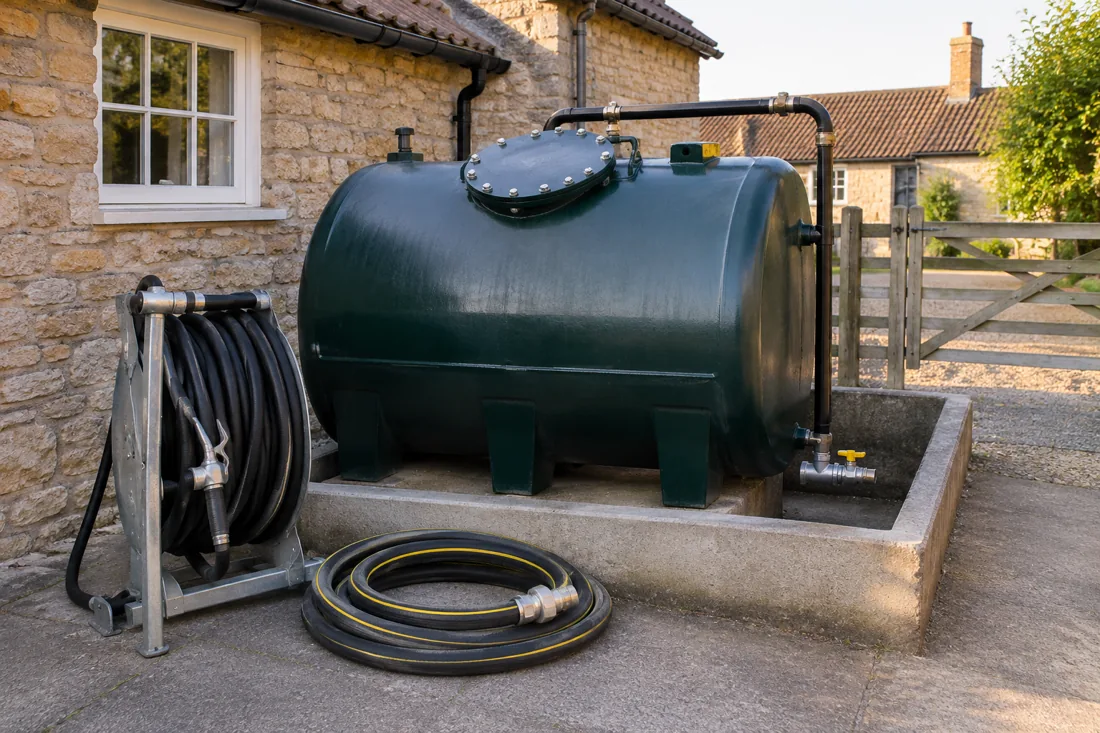
Start With The Symptom, Not A Cleaning Date
Repeated filter blockage, hazy fuel or unreliable heating can point to contamination in an oil tank. They can also have other causes. A useful assessment looks at the fuel, tank condition and connected system before deciding that cleaning is the right answer.
We welcome cleaning enquiries for domestic heating oil stores and commercial or agricultural fuel tanks in Lincolnshire. Explain what changed, when it started and whether a boiler engineer or equipment technician has already attended. Their findings can help avoid repeating work or overlooking a fault elsewhere.
Water, Sludge And The Tank Itself
Water and sediment can settle below usable fuel, where an ordinary gauge cannot show them. Water contamination can support microbial growth in stored fuel and contribute to corrosion in steel tanks. Disturbance during deliveries may bring settled material into the supply.
Cleaning removes unwanted deposits, but does not mend a split shell, corroded seam or failed support. A tank in poor structural condition may need replacement instead. The assessment should also look for how contamination entered, otherwise fresh fuel may meet the same problem after the clean.
Choose Cleaning, Fuel Treatment Or Replacement
Cleaning targets the tank interior and material accumulated there. Fuel filtration or polishing targets contamination within the fuel itself. The services may be combined, but passing oil through a filter is not proof that deposits have been removed from the tank floor.
If the tank is sound and deposits are accessible, cleaning may be appropriate. If the fuel specification is uncertain, sampling can inform a treatment or disposal decision. If there is a leak or significant deformation, structural assessment takes priority over trying to improve the fuel.
Tell us if you are changing the product stored. Compatibility and the previous contents affect whether reuse is suitable and what preparation is needed.
How A Professional Clean Is Planned
The method depends on tank construction, openings, contamination and access for equipment. Work may involve transferring usable oil into suitable temporary storage, recovering water and sludge, and cleaning accessible internal surfaces. Suction, mechanical cleaning or washing are selected to suit the tank.
Entry into a tank is avoided where the work can be done from outside. Where confined-space work is necessary, it needs a specialist safe system and emergency arrangements under the HSE confined-space framework. Do not enter a tank or remove access covers yourself.
The contractor should confirm the required shutdown and how the connected system will be returned to service. Agree who checks filters and associated equipment afterwards.
What Happens To The Fuel
Usable oil may be held separately and returned after assessment and suitable filtration. A high fuel level changes the amount of temporary storage and pumping required. Contaminated oil cannot be promised back into service simply because it looks clearer after filtering.
Give an approximate fuel quantity, product type and recent delivery history. Ask whether sampling is included and how rejected product will be handled. Replacement fuel, if needed, should be treated as a separate arrangement unless expressly included in the quote.
Access And Cost Drivers
Photograph the tank, its fittings and the route from possible parking to the work area. Include narrow garden passages, changes of level and any enclosure around the tank. On a commercial site, provide tank drawings or hatch information if you already hold them.
Cleaning cost depends on capacity, remaining fuel, sludge quantity, the available openings and the method needed. Longer hose runs, specialist temporary storage, confined-space controls and waste treatment can add to the scope. A domestic heating interruption and a generator outage also need different scheduling.
For a farm, identify when the equipment is essential and whether animals or machinery movements restrict the work area. Do not assume a cleaning vehicle can use ground normally crossed by tractors.
Records And Preventing A Repeat
Ask for a record of the condition found, cleaning undertaken and what fuel was returned or rejected. Waste documentation should match the actual material removed and its classification. Commercial buyers may need method statements, permits and a record suitable for their maintenance system.
Discuss any damaged caps, seals or fittings that could let water back in. Keep the tank available for inspection rather than concealing it behind dense growth or stored materials. Subsequent fuel issues should be investigated, rather than treated as proof that another clean is automatically due.
Common Questions
How Often Should An Oil Tank Be Cleaned?
Oil tank cleaning should follow the condition of the tank and fuel rather than an arbitrary calendar promise. Inspection and sampling can identify water, sediment or other contamination. A sound tank with clean fuel may not need the same intervention as one with repeated filter blockage or a known water ingress problem.
Will Cleaning Keep The Heating Running?
Oil tank cleaning normally interrupts the supply while fuel is removed and the tank is worked on. The length of the interruption depends on the method and system. Discuss temporary arrangements before booking if heat or equipment is critical, and have the return-to-service checks included in the agreed work.
Tell us what you have and what needs to change.
Request a quote