Begin With The Fuel System
A new installation starts with the equipment that needs fuel, rather than a tank chosen from a catalogue. A home heating system, a farm grain dryer and a commercial standby generator have different operating patterns. Capacity, pipework and controls need to suit the intended use.
We help Lincolnshire property owners and site managers put together a useful installation enquiry. Tell us whether this is the first tank on the property, an additional store or a move away from buried storage. If an old tank needs replacing, our replacement guide covers the changeover questions.
Choose A Position That Remains Usable
The installer needs to assess the tank, delivery position and connection route together. A sheltered corner can still be unsuitable if it is close to vulnerable building features, drainage or traffic. Leave space for inspection, maintenance and future removal as well as the first delivery.
Think beyond the current garden or yard layout. Proposed extensions, gates, fences and stored materials can change access or fire protection requirements. On a shared property, establish who controls the tank area and whether access arrangements will remain available throughout its working life.
Domestic, Agricultural And Business Storage
The applicable rules depend on where oil is stored and what it is used for. GOV.UK separates domestic storage, agricultural fuel and other business storage. Farmhouse heating should not automatically be assessed as though it were fuel for agricultural machinery.
Describe the intended use clearly and refer the installer to the relevant government oil storage guidance. New domestic installations also need consideration under Building Regulations. The survey should establish the appropriate containment, fire protection and compliance route for this specific project.
Do not assume an existing neighbouring tank gives permission for the same arrangement. Its age, use and risk profile may be different.
Select The Tank And Supporting Works
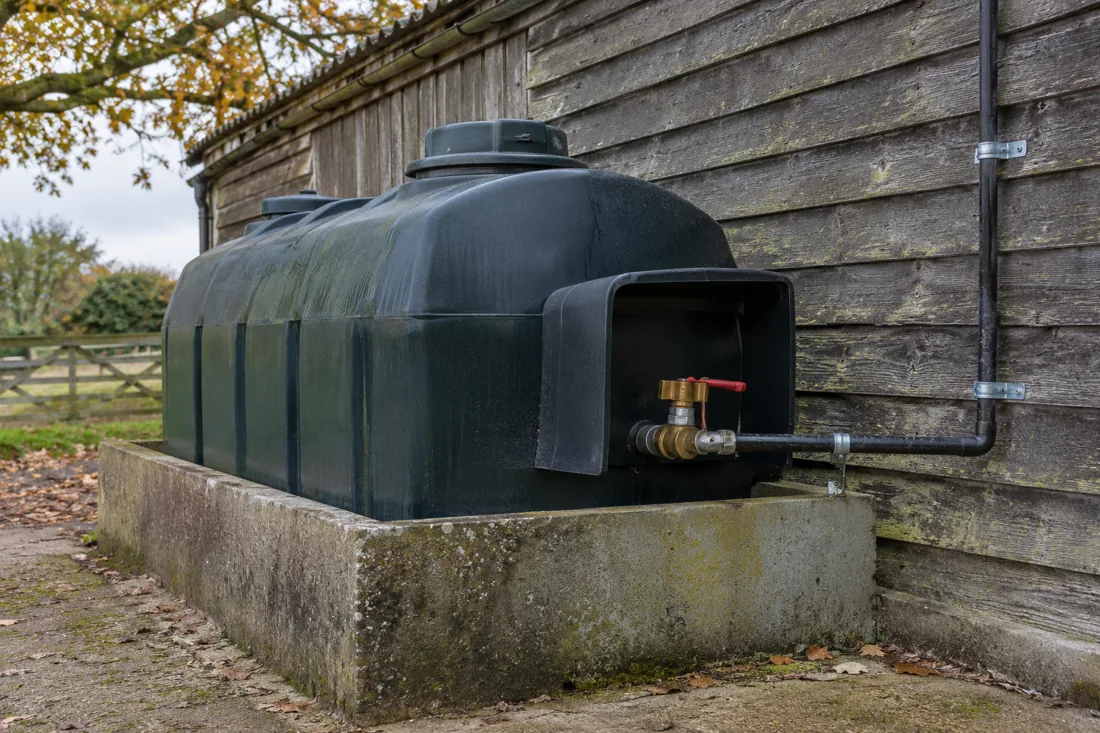
Tank material and shape affect footprint, handling and support. A slimline tank can suit a narrow position, but still needs a route into place and enough room for its fittings. A bunded tank’s outer dimensions matter when checking a gate or enclosure.
Capacity should reflect realistic use, delivery quantities and available space. The base needs to support the chosen model in line with manufacturer instructions. Ground preparation, drainage and any protection from vehicle impact should be described in the quotation rather than left as assumptions.
Commercial installations may include dispensing equipment, alarms or monitoring. Specify these functions early, including who will operate them and what records the site needs.
Installation And Bringing It Into Service
The agreed programme normally separates preparation from delivery and connection. A new base may need to be built and ready before the tank arrives. Pipe routes and any ground works should be coordinated with other contractors so they are not covered before checks are complete.
A competent installer positions the tank, connects the intended supply and carries out the appropriate checks before handover. Fuel delivery timing should be agreed with them, rather than ordering oil before the installation is accepted. Ask who is responsible for organising the first fill and confirming the system is ready.
What To Send And What Affects Cost
Send a postcode, a site overview, photographs of the proposed position and the access route, and a description of the equipment being supplied. Include estimated consumption if known, your preferred installation date and any building works happening at the same time.
A rural driveway may have a restricted bridge, low trees or nowhere for a large vehicle to turn. Mention these even if an ordinary car can reach the property. Tank specification, base works, lifting, line length, excavation and controls all influence the final cost.
Ask the quotation to identify exclusions such as landscaping or unrelated boiler work. That makes it easier to compare proposals on the same basis.
Handover And Future Checks
Keep manufacturer instructions, warranty information and installation records. Agree which commissioning and compliance documents apply to the work, including notification where required. The installer should explain safe filling arrangements and what visible changes need professional attention.
Arrange a suitable inspection routine rather than waiting for an unexplained loss of oil. Keep the surrounding area accessible, and record future alterations near the tank. Any later extension or change of use should prompt a fresh look at the storage arrangement.
Common Questions
Do I Need A Bunded Tank?
A bunded oil tank is often part of the solution, but the requirement depends on the storage use and pollution risk. The installer should assess the proposed position, drainage and relevant rules. Do not select single-skin storage solely because it costs less or resembles the tank already on the property.
Can A New Tank Go At The Far End Of A Garden?
A new oil tank position needs suitable delivery access, a workable supply route and appropriate protection. A distant corner may increase pipework and make inspection awkward. Send photographs of the complete route and nearby features so the installer can assess the position before a tank or base is ordered.
Tell us what you have and what needs to change.
Request a quote