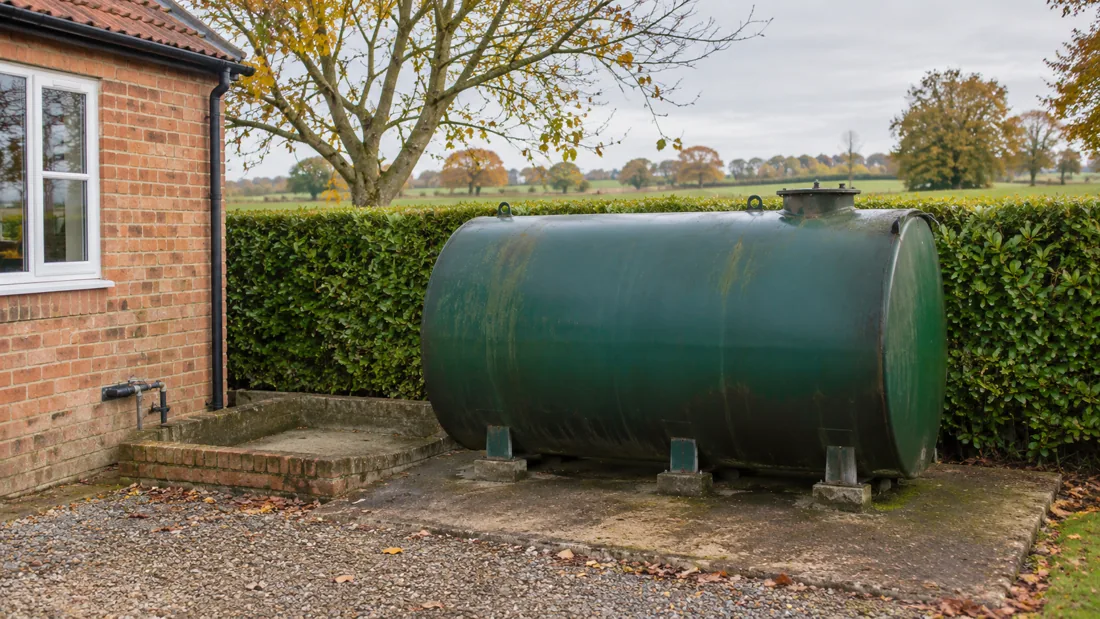
Remove The Tank, Resolve The Whole Installation
An old oil tank can stand in the way of a heating conversion, a garden project or a change of use on a farm. Removal needs to deal with the contents and connections as well as the visible tank. Leaving a fill pipe behind can create a risk of a future delivery into redundant equipment.
We help with enquiries for plastic and steel tanks at homes, agricultural premises and commercial properties across Lincolnshire. Tell us whether the tank still supplies heating or machinery, and whether you want a replacement. A tank that has already leaked needs a different scope from a sound tank being retired.
Choose The Right Removal Route
A visible above-ground tank with a clear route out may be removable whole after preparation. A tank behind a narrow gate, inside a building or beneath an extension can need a sectional removal method. The decision follows an assessment of its construction, residue and surroundings.
Choose removal alone if you no longer need oil storage. Choose tank replacement if you still rely on it. If the tank is partly or fully buried, use our underground tank guide because excavation and ground investigation may be involved.
What Happens Before It Leaves
The contractor establishes what the tank held, how it connects to the system and how the work area can be separated from people and vehicles. Isolation, controlled recovery of liquids and cleaning come before a planned lift or cutting operation. Empty-looking tanks can retain dangerous residues.
The method should avoid hot work where a suitable safer alternative exists. HSE warns about fire and explosion when work is undertaken on tanks that have contained flammable substances. This is specialist work, not an invitation to drain, cut or move the tank yourself.
Removal should also settle the fate of redundant pipework, fill points and supports. Demolishing the base or repairing a patio is a separate item unless specifically included.
The Oil Left Inside Matters
You do not need to run a tank dry before asking for removal. Give an approximate gauge reading and the date of the last delivery, without opening or disturbing the tank. Fuel condition determines whether recovery for reuse is sensible.
Clean, compatible fuel may be transferable to suitable storage by agreement. Water, sludge and unsuitable product need a separate disposal route. A quoted removal price should state how recovered fuel and waste are handled, rather than assuming every litre can be kept or has a resale value.
Access Across Gardens And Farmyards
Photograph the route from the vehicle parking position to the tank. Include gates, steps, tight corners, overhead obstructions and any soft ground that equipment would have to cross. A wide farm entrance does not necessarily mean a loaded vehicle can turn beside the tank.
Mention shared driveways, livestock movements and delivery traffic. For a commercial tank, supply site induction requirements, working hours and any lifting restrictions. If permission is needed to cross a neighbour’s land, resolve it before a method and date are agreed.
What Changes The Cost
Capacity, material, remaining liquids and the removal route are the main cost drivers. Sectional removal, specialist lifting, long hose runs and difficult parking add work. Ground contamination or concealed pipework can change the scope after inspection.
Ask for separate wording on fuel recovery, waste transport, tank removal and ground reinstatement. A written allowance for uncertain conditions is more useful than an unexplained fixed figure. No site price is published here because two tanks of the same capacity can require very different equipment.
Records And Your Enquiry
Request a completion record that identifies the tank and the work done, with waste documentation appropriate to the material and disposal route. Commercial projects may also require site-specific risk assessments, method statements and a lift plan. A gas-free record is relevant where the method calls for it, rather than an automatic certificate for every collection.
Send your postcode, tank photographs, approximate capacity, fuel type and remaining quantity. Include whether the base should stay and what you intend to do with the space. Keep the agreed scope and completion records with your property or site documents.
Common Questions
Can You Remove A Tank Without Replacing It?
Oil tank removal can be a standalone job when heating changes or storage is no longer needed. The scope should include remaining fuel, residue, connections and the tank itself. Tell us if the base, surrounding enclosure or old supply line also needs attention so these items can be considered before a quotation.
Does An Empty Tank Still Need Cleaning?
An empty oil tank can still contain sludge, trapped liquid and vapour. A low gauge reading does not make it safe for cutting or transport. The contractor assesses preparation against the planned method, tank construction and former contents, then decides what cleaning and testing are needed before removal proceeds.
Tell us what you have and what needs to change.
Request a quote